
 Ómar Thor ÓmarssonUpdated
 The self-improving website: a new way to run your B2B website
For decades, every website platform made you do all the work. That time is over. There is a new way to run your B2B website.
TLDR
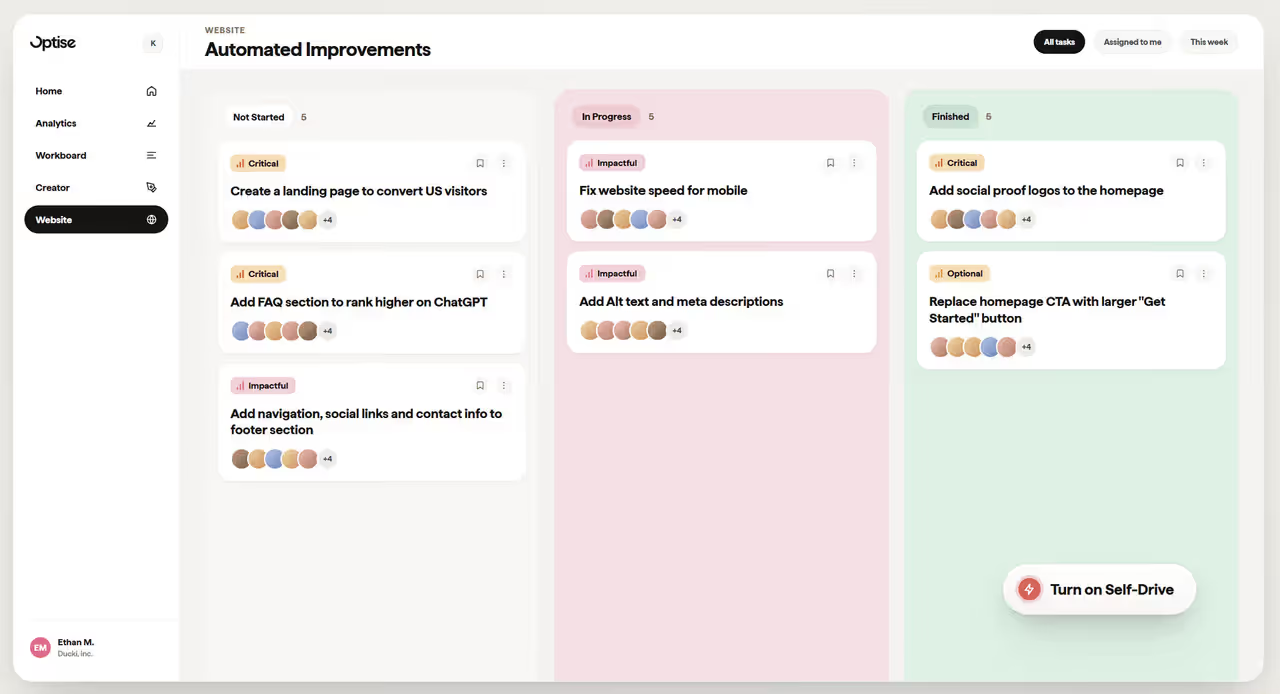
For 25 years, a B2B website was a project. You briefed it, built it, launched it, and watched it slowly fall behind. The self-improving website platform is the new way to manage and optimise your B2B website. It learns your business, watches how buyers behave, studies what the best B2B websites do, and ships improvements every week while you stay in control. Building a website was never the hard part. Keeping it found, current, and converting is. That is the job the old model was never built to do.
Looking for the short version? See the definition page: What is a self-improving website?
Smart summary
- The old way treats a website as a one-time project. The new way treats it as a system that improves continuously.
- AI made building a website cheap and fast. So building is no longer the advantage. Keeping the website performing is.
- Buyers now discover B2B companies through Google and through AI engines like ChatGPT, Perplexity, Gemini, and Claude. If you are not found in both, you do not exist to them.
- A self-improving website platform ships weekly improvements to copy, CTAs, pages, internal links, technical SEO, and AI visibility.
- You approve every change before it goes live. The platform does the work. You keep the final say.
- The redesign cycle is dead. Replacing it with continuous improvement is the single biggest change to how B2B websites work.
Why this matters
Your company changes every week. You ship a feature, win a customer, enter a market, sharpen your pitch. Your website does not keep up. The gap between what your company is today and what your website says it is keeps widening.
That gap is expensive. It costs you leads that bounce because the message is stale. It costs you deals you never see, because a buyer asked an AI engine for a recommendation and your name did not come up. It costs you credibility, because the first impression no longer matches the company behind it.
The frustrating part is that nobody on your team has time to fix it properly. The founder does it when there is a spare hour. The marketer is buried. The agency takes 3 weeks and an invoice for one new page. So the website sits there, quietly losing you business.
This is not a design problem. It is a model problem. The way B2B teams have run websites for two decades was built for a world that no longer exists.
Quick answers
- What is a self-improving website platform? A platform that builds, manages, and continuously improves your B2B website using AI and data, shipping improvements every week while you approve what goes live.
- What is the old way of running a B2B website? Treat it as a project. Build it, launch it, leave it, redesign it every 2 to 3 years.
- What is the new way? Treat the website as a system that improves itself every week, guided by data and kept under your control.
- Why is building no longer the advantage? AI made building a website cheap and fast, so the hard part moved to keeping it found, current, and converting over time.
- Who is it for? B2B companies whose business is moving faster than their website, from fast-growing funded startups to established firms stuck on a legacy site.
- Do you stay in control? Yes. Every improvement is visible before it goes live. You approve it, adjust it, or do it yourself.
The old way: a website was a project
For 25 years the model was the same. You hired an agency or a freelancer or you did it yourself. You wrote a brief. You argued over design. You launched. Everyone celebrated.
Then the decay started. The product moved on. The messaging drifted. A competitor launched something sharper. A new page meant a new brief, a new scope, a new invoice, and a 3 week wait. Search engines changed their rules. Most teams did nothing, because doing something was slow and painful.
Two or three years later the site looked old, so you started the whole cycle again. A redesign. A new brief. A new launch. The same slow decay.
The old way had one fatal assumption baked into it: that a website is something you finish. It never was. A B2B website is the one place where your brand, your product, your messaging, and your proof all have to work together, in front of every buyer, every day. That is not a project. That is a living system. The old model never treated it like one.
What changed: building is no longer the hard part
AI changed the economics of websites. A founder with no design training can now generate a decent site in an afternoon. Agencies can ship faster than ever. The cost and effort of building dropped to almost nothing.
When building gets easy, building stops being the advantage. Everyone can do it. The hard part moves somewhere else.
For B2B websites, the hard part is everything that happens after launch. Knowing what to improve and why. Keeping the copy aligned with the business. Getting found as search changes. Lifting conversion week after week. Adding the right pages at the right time. That work never ends, and it is the work that actually drives leads. It is also the work no website tool was ever built to do for you.
This is the shift behind every serious conversation about B2B websites right now. The bottleneck is no longer creation. It is continuous improvement and distribution.
Why getting found got harder, not easier
It used to be simple. Rank on Google and you were found. Now your buyers discover companies in two places at once.

They still search Google. But they also ask ChatGPT, Perplexity, Gemini, and Claude for recommendations, and they trust the answer. When a buyer asks an AI engine "what is the best platform for X," your company is either in that answer or it is invisible. Most B2B websites are not built to be cited by AI engines at all.
Being found now means performing for search engines and AI engines at the same time. The rules overlap but they are not identical, and both change fast. Keeping up with that by hand, on top of everything else, is not realistic for a normal B2B team. This is exactly the kind of moving target a system handles better than a person with a spare hour. If you want the background on this shift, our guide to answer engine optimisation for B2B teams covers it in depth.
What is a self-improving website platform?
A self-improving website platform builds, manages, and continuously improves your B2B website using AI and data. It ships improvements every week, like better copy, stronger CTAs, new pages, internal links, and technical and AI search visibility, while keeping you in full control of what gets published.
It works on three layers of input. It learns your business: your strategy, your products, your positioning. It watches your market and how real buyers behave on your site. And it learns from thousands of B2B websites, applying what the best ones do to yours. Then it does the part that matters most. It knows what to change, and it ships it.
That last point is the whole difference. Other platforms let you design. They wait for you to decide what to do. A self-improving website already knows, and it acts, with your approval. You can read more about how this works on our automated website improvements page.
How it works
Underneath the idea sit three things working together: a system that suggests and ships improvements, a CMS that keeps you in control, and analytics that tell you whether any of it worked.
It suggests improvements, then ships them
The platform reviews your site continuously and proposes specific, ready-to-publish changes. Not vague advice. The actual improvement, prepared and waiting for your approval.
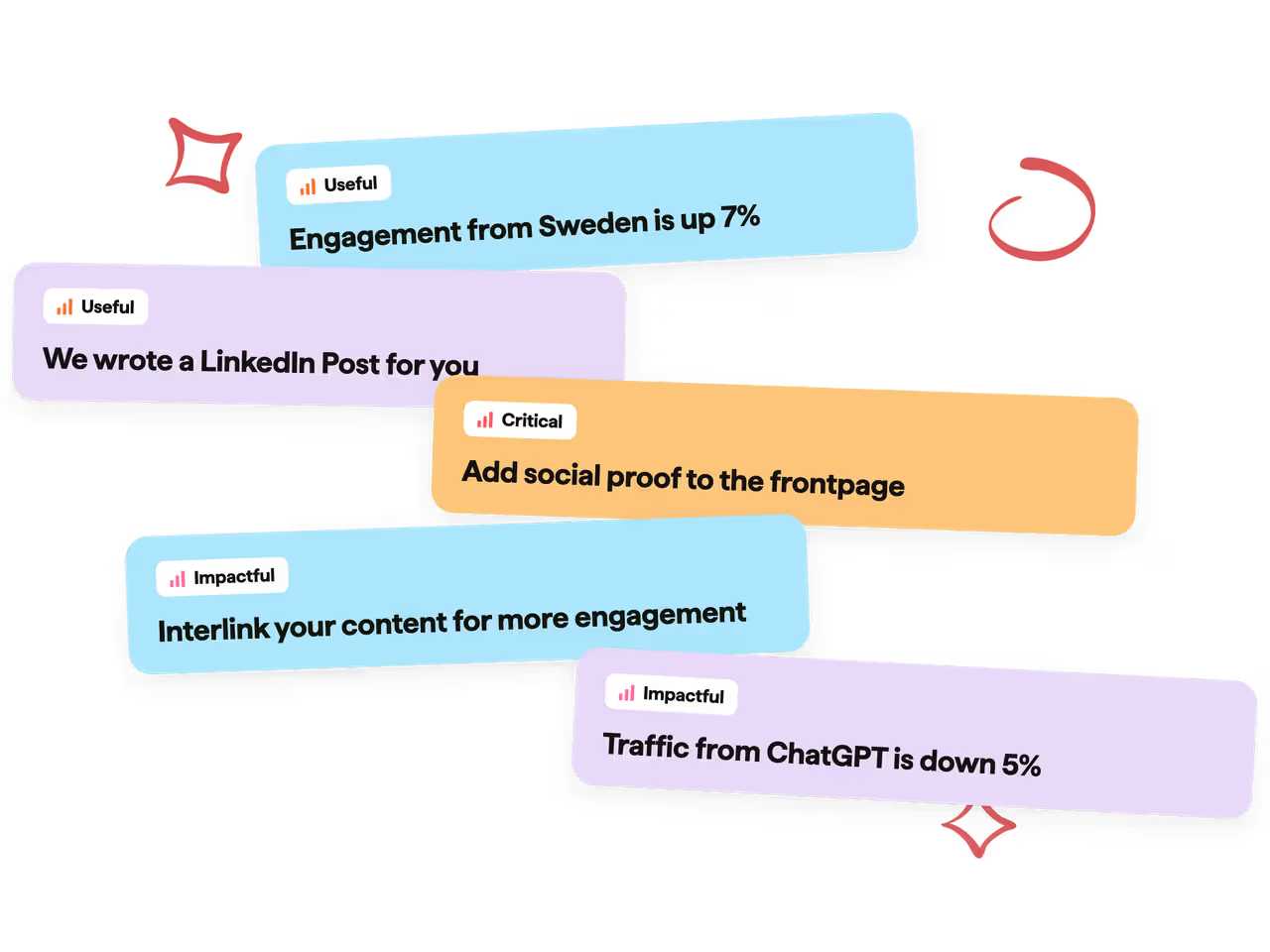
For example:
- Rewrite a hero headline that does not make clear what you do.
- Strengthen a weak CTA, or move it higher on a page where visitors drop off.
- Add a new page to answer a question your buyers keep asking, like a comparison page or a use case page.
- Add internal links between related pages so the right page ranks.
- Fix technical issues that slow the site or hurt search, like a heavy image or a missing meta title.
- Add an FAQ block written so AI engines can quote it.
Every suggestion comes with the reason behind it, so you are never guessing why. This is the automated improvements engine doing the work a website team would do, every week.
A CMS that keeps you in control
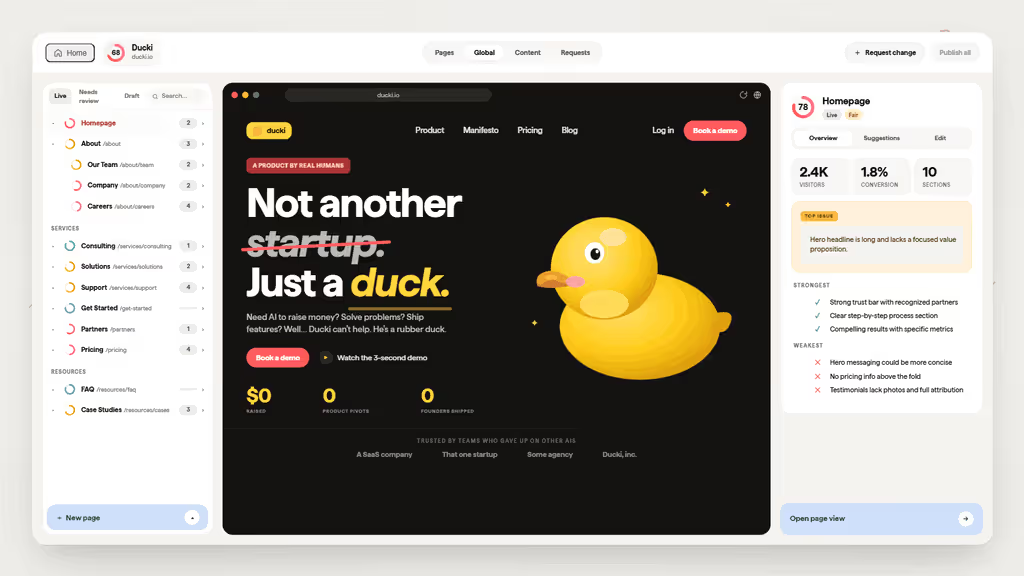
Nothing ships until you say so. Every proposed change shows up in the CMS for you to approve, adjust, or skip. You can also edit anything yourself in a visual editor, with no code. The platform does the heavy lifting. You hold the final say on what your visitors see.
Analytics that show if it worked
Built-in analytics track what each change did to your traffic, rankings, and conversions. You see whether the numbers moved, not just that something shipped. That same data feeds the next round of suggestions, so the system gets sharper the longer you use it.
What it looks like in practice
A self-improving website is not a robot taking over your site. It is closer to having an expert website team working in the background, every week, who never runs out of time.
Here is what a typical week looks like:
- The platform reviews your website, your performance data, and your market.
- It finds the highest-impact improvement and prepares it. A clearer hero section, a stronger CTA, a new page targeting a question your buyers keep asking AI engines, an internal link, or a fix to a slow-loading page.
- It shows you the change before anything goes live.
- You approve it, adjust it, or do it yourself.
- It ships, and built-in analytics show you whether the numbers moved.
Nothing ships behind your back. The platform drives. You hold the keys.
Who this is for, and who it isn't
The self-improving model fits B2B companies whose business is moving faster than their website can follow. Fast-growing funded startups whose site is thin and falling behind. Established B2B companies whose legacy site is slow and painful to change. Both share the same problem: the website matters, and improving it is full-time work nobody has time for.
It is not for everyone. If you want a one-time build and then to walk away, you want an agency. If you need pixel-level control over every element, the continuous model will frustrate you. And if you do not believe the website actually drives your business, no platform will change that. The new way is for teams who see the website as a growth channel and want it run like one.
Real examples: websites that already behave like systems
Linear
What they do well: Linear's site stays tight and current. The message is sharp, the pages load fast, and the site clearly reflects the product as it is now, not as it was at launch.
What could be better: Even a great site like this depends on a team manually deciding what to update and when. That is real, ongoing effort, and it competes with building the product.
What to do next: The lesson for the rest of us is the standard, not the manual work. Aim for a site that stays this current, but let a system carry the weekly load instead of your team.
Notion
What they do well: Notion's website grows. New use cases, new pages, deeper content. The site gets bigger and more useful over time, which is exactly what a healthy B2B website should do.
What could be better: Growth like this usually needs a large team and a lot of coordination. Most B2B companies cannot staff that.
What to do next: Treat "the site gets richer over time" as the goal, then ask how to get there without a 20 person web team. That is the gap a self-improving platform closes.
Figma
What they do well: Figma keeps its messaging and design crisp and consistent, and the site earns trust in seconds. It looks like the company behind it.
What could be better: Looking great is not the same as being found. As buyers move to AI engines, even a beautiful site has to be built to be cited, not just admired.
What to do next: Hold the bar on clarity and trust, and add continuous work on search and AI visibility so the site gets found as often as it gets praised.
Conclusion
The website stopped being a project. It became a system. AI made building easy, buyers moved to search engines and AI engines at once, and your business keeps changing faster than any redesign cycle can follow. The teams that win from here are not the ones with the prettiest launch. They are the ones whose website gets better every week. That is the new way, and that is the self-improving website platform.
If you want to see where your website stands today, and what it would improve first, start a free trial of Optise.
Mini Q&A
Is a self-improving website the same as an AI website builder?
No. AI builders generate a website and then move on. A self-improving website platform keeps working after launch. It studies your business and your market, decides what to improve, and ships changes every week, with your approval. Building is the start, not the finish.
Will a self-improving website take control away from me?
No. Control is the point. The platform proposes and prepares every improvement, but nothing goes live until you approve it. You can adjust any change or make it yourself. You get the work done for you and you keep the final say.
Do I still need an agency or a developer?
For most B2B teams, no. A self-improving website platform folds design, content, technical work, SEO, and AI visibility into one system. That replaces the cycle of agency briefs, developer queues, and redesigns that go stale within a year.
FAQ
What is a self-improving website platform?
It is a platform that builds, manages, and continuously improves your B2B website using AI and data, shipping weekly improvements to copy, CTAs, pages, internal links, and search and AI visibility, while you approve what goes live.
How is the new way different from the old way of running a website?
The old way treats the website as a project you finish and redesign every few years. The new way treats it as a system that improves every week, so it never falls behind your business.
Why is building a website no longer the hard part?
AI made building fast and cheap, so almost anyone can launch a decent site. The hard part is everything after launch: staying found, staying current, and converting better over time.
Do B2B websites still matter now that buyers use AI?
Yes, more than ever. Buyers research through Google and AI engines, and both often lead back to your website. The website is where trust is won or lost and where action happens.
How do I get my website found on AI engines like ChatGPT and Perplexity?
You make your site easy for AI engines to read, quote, and trust, with clear answers, structured content, and consistent facts. A self-improving platform works on this continuously rather than once.
Will AI replace web design agencies?
It is already changing them. The work is shifting from one-time builds to continuous improvement. Teams that only sell a project will struggle. The value now is in keeping the website performing over time.
Is this only for startups?
No. It fits fast-growing startups whose site is falling behind and established B2B companies stuck with a slow legacy site. The common thread is a business moving faster than its website.
How often does a self-improving website actually change?
Every week. The platform finds the highest-impact improvement, prepares it, and presents it for your approval, so progress compounds instead of waiting for the next redesign.
What does this cost compared to an agency?
It sits well below a typical agency retainer and replaces a stack of separate tools and internal hours. One platform and one team handle the work that used to need several vendors.
How do I know if my website needs this?
If your site looks stale months after launch, if you are not sure what to fix next, or if you are invisible on AI engines, you are still on the old model. A free trial will show you where you stand.
Ómar Thor Ómarsson
CEO & Co-founder