
 Ómar Thor Ómarsson
Why B2B websites have been broken for 20 years
B2B website management has been broken across agencies and disconnected tools for two decades. Here is how a self-improving platform turns your website into your primary salesperson.
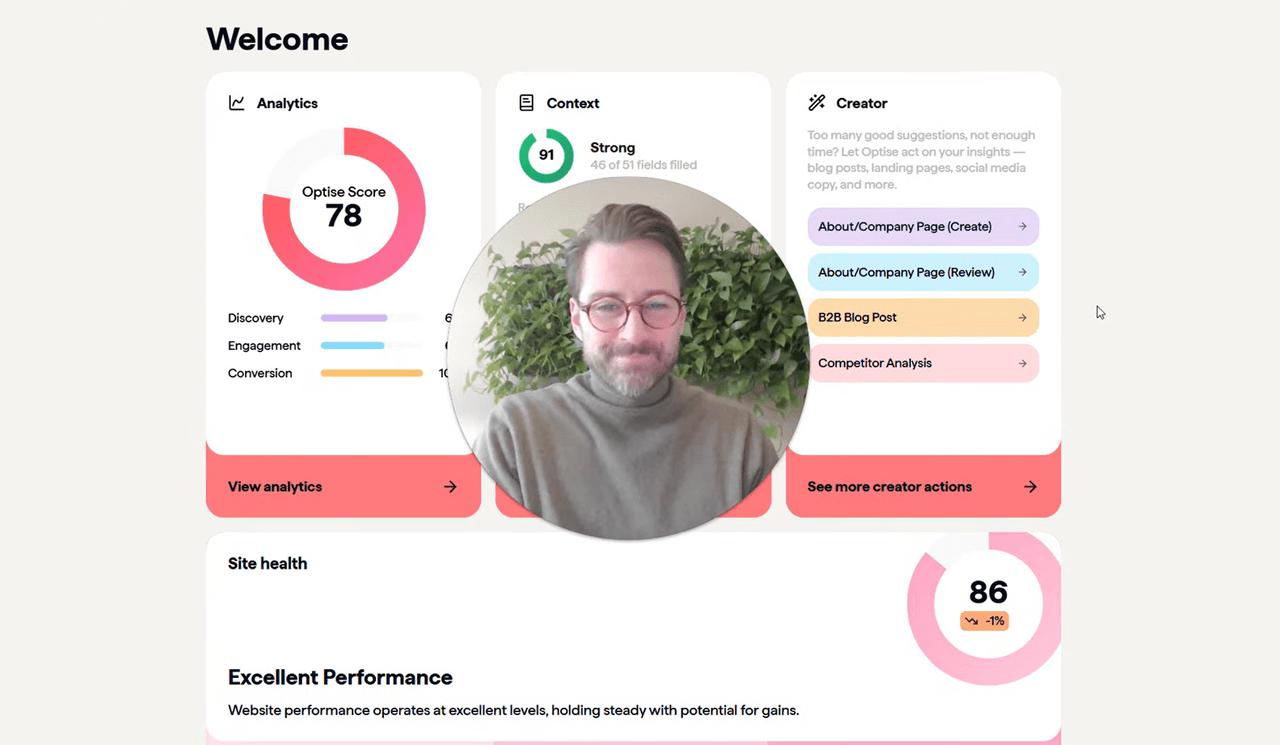
B2B website management has trapped growth teams in a cycle of sluggish agencies, isolated software tools, and stale pages for twenty years. While your product ships updates every week, your website stays frozen in the month you launched it. A self-improving platform replaces that fragmented machinery, shipping continuous optimizations each week so one person can turn the website into a business's primary revenue engine.
Fragmentation: why website management broke for twenty years
Most B2B companies run their web presence on a patchwork of disconnected vendors. You hire an agency for design, pay for a CMS to hold text, add an SEO suite to identify technical errors, and bolt on an analytics package that nobody checks. Each piece operates in isolation, leaving an internal team member with forty other priorities to stitch them together.
That operational friction creates an enormous tax on company momentum. A single landing page request requires an agency brief, a multi-week wait, and a fresh invoice. In our earlier breakdown of the self-improving website, we documented how this cycle turns web updates into an expensive chore rather than a weekly growth habit.
AI search: how buyer behavior changed the stakes
Artificial intelligence turned an already inefficient web workflow into an acute pipeline problem. According to Forrester's Buyers' Journey research, 94% of business buyers now use generative AI and conversational search during their evaluation process. Buyers ask tools like ChatGPT, Claude, and Perplexity to compare vendors long before they ever fill out a demo form.
These generative models build their vendor recommendations by reading and parsing your public website copy. If your technical architecture is unindexed, your positioning is unclear, or your product comparisons are missing, AI engines treat your company as non-existent. The website has become your most critical channel at the exact moment it grew hardest to maintain by hand.
- Buyers research capabilities, pricing models, and competitors inside conversational search tools instead of browsing search result links.
- Generative engines scrape, index, and synthesize structured website passages to recommend shortlists to business buyers.
- Companies with stale copy, broken technical signals, or missing answers disappear from buyer evaluations before direct sales conversations even start.
Self-improving platforms: running your website with one person
A self-improving website platform fundamentally changes how teams manage their digital footprint. Instead of waiting for a marketer to diagnose dropped traffic or write fresh copy, the system audits your site continuously against real buyer behavior and live market data. It then builds concrete, ready-to-ship fixes directly in your CMS so you can review and publish them in minutes.
What used to require an outside agency, a front-end developer, and an SEO consultant can now be handled by a single operator. The platform reviews site performance, proposes high-impact changes, and uses built-in analytics to measure whether conversion actually improved after publishing. You retain full control over your brand, but the software does the heavy lifting.
Watch the full walk through here.
"We're on a mission to make the website the #1 salesperson in every B2B company."
Walkthrough: inside the Optise platform
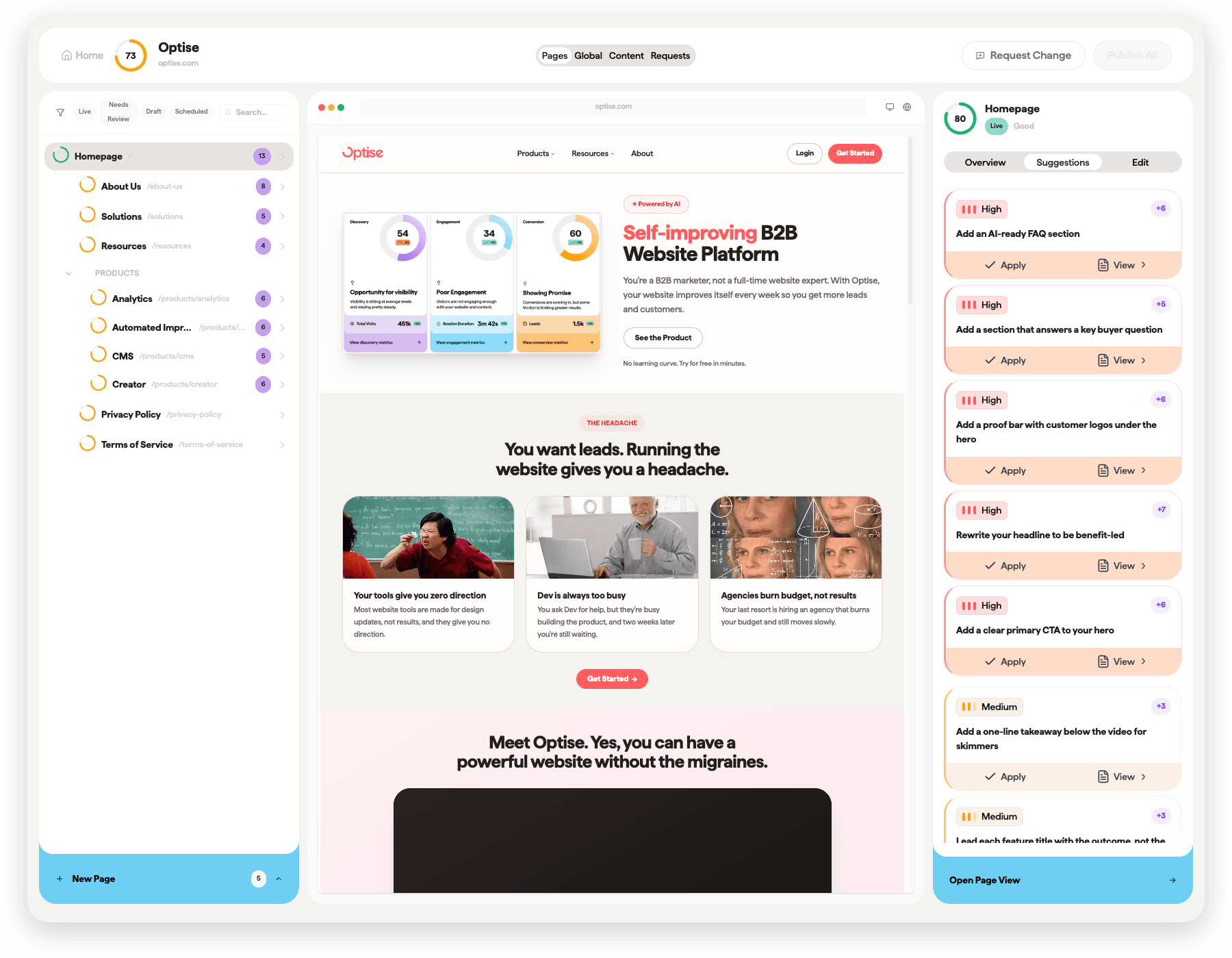
Seeing the shift in practice explains why continuous optimization outperforms the old multi-year redesign cycle. In our latest recorded walkthrough, we open up the platform to show how automated improvements surface high-priority adjustments, draft new landing pages, and handle technical search tasks without developer tickets.
The walkthrough covers how the system detects messaging gaps, how easy it is to accept or refine weekly suggestions, and how real-time performance tracking validates every change.
Sales: turning your website into your top revenue driver
Treating your website as a completed one-off project is no longer viable when search habits and market conditions change every week. The companies winning pipeline today treat their web presence as an active software product that improves continuously. You can eliminate agency backlogs, fix underperforming pages, and ensure both human buyers and AI engines discover your real value.
If you are ready to stop managing fragmented tools and start compounding your inbound results, learn how the self-improving website works today.
Ómar Thor Ómarsson
CEO & Co-founder