
The category
What is a self-improving website?
A self-improving website is a business website that gets measurably better every week, on its own. An AI platform measures how the website performs, decides what to improve, and ships the changes, while a human approves every move. For B2B companies, it replaces the old cycle of launch, decay, and redesign.
No credit card · Try in minutes
Last updated September 30, 2026
The old way, and why it stopped working
Websites have always been projects. You design one, launch it, celebrate, and move on. From that day, it ages.
The numbers on this are blunt. The average business website gets rebuilt roughly every two and a half years (Orbit Media's long-running study). A quarter of business websites are updated less than once a year (Network Solutions, 2026). And 81% of redesigns are triggered by the same event: conversions fell far enough that someone finally noticed (GoodFirms survey data). Then comes the expensive part: fewer than 25% of redesigns measurably improve conversions, according to agency before-and-after data. Launch, decay, rebuild, repeat. Every platform, agency, and tool of the last twenty years was built to serve some part of that cycle. (We break down the full case in the website redesign is dead.)
Meanwhile, the job got harder. Your buyers now find you through Google and through AI answers on ChatGPT, Gemini, and Perplexity, and the rules of both change week to week. A website that stands still does more than look dated. It quietly disappears from the places buyers look.
The self-improving website exists because the cycle can't keep up anymore. Instead of improving the website in projects, a system improves it continuously.
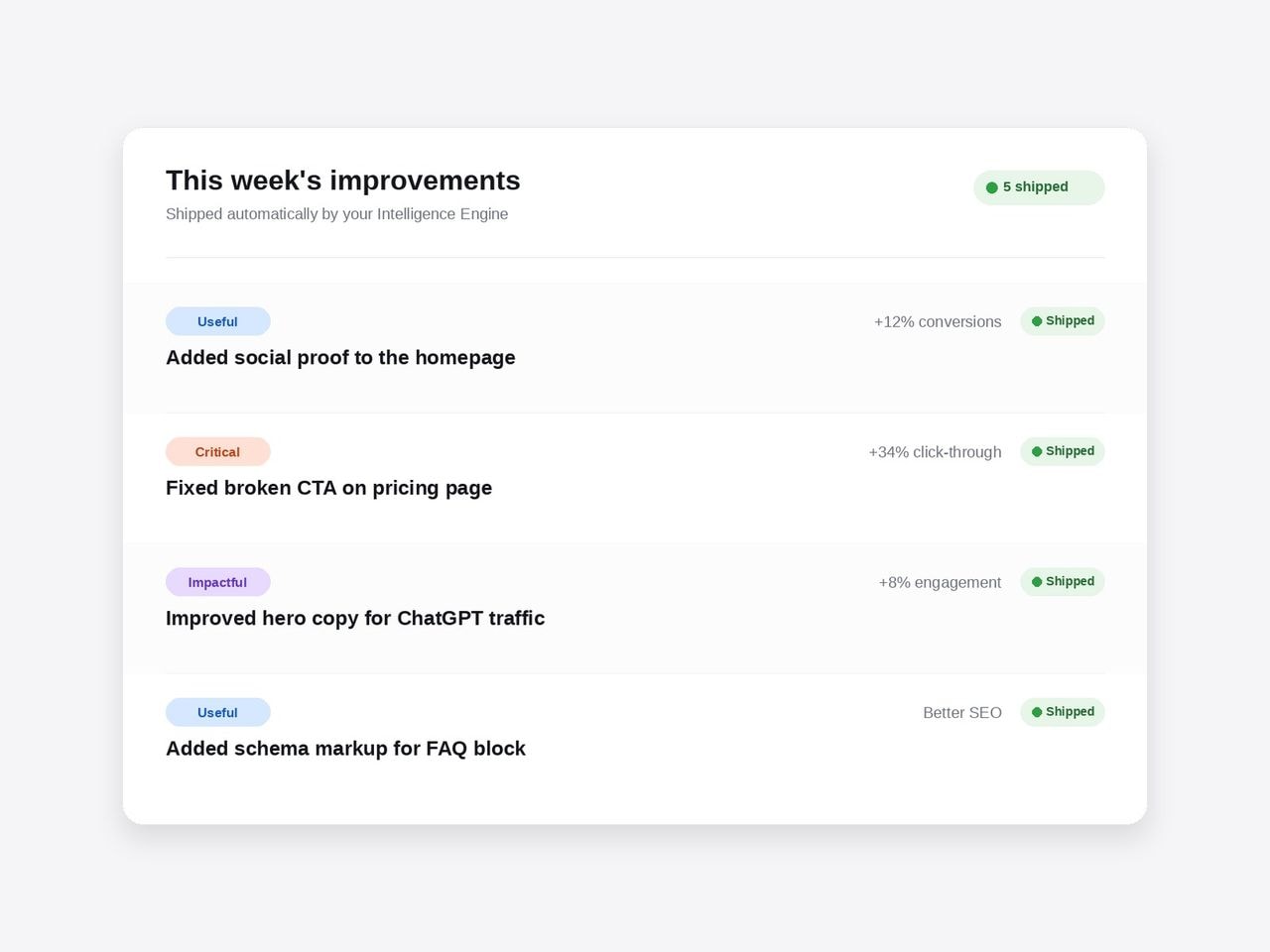
How a self-improving website works
A self-improving website runs on a loop. Four steps, repeating every week:
Measure
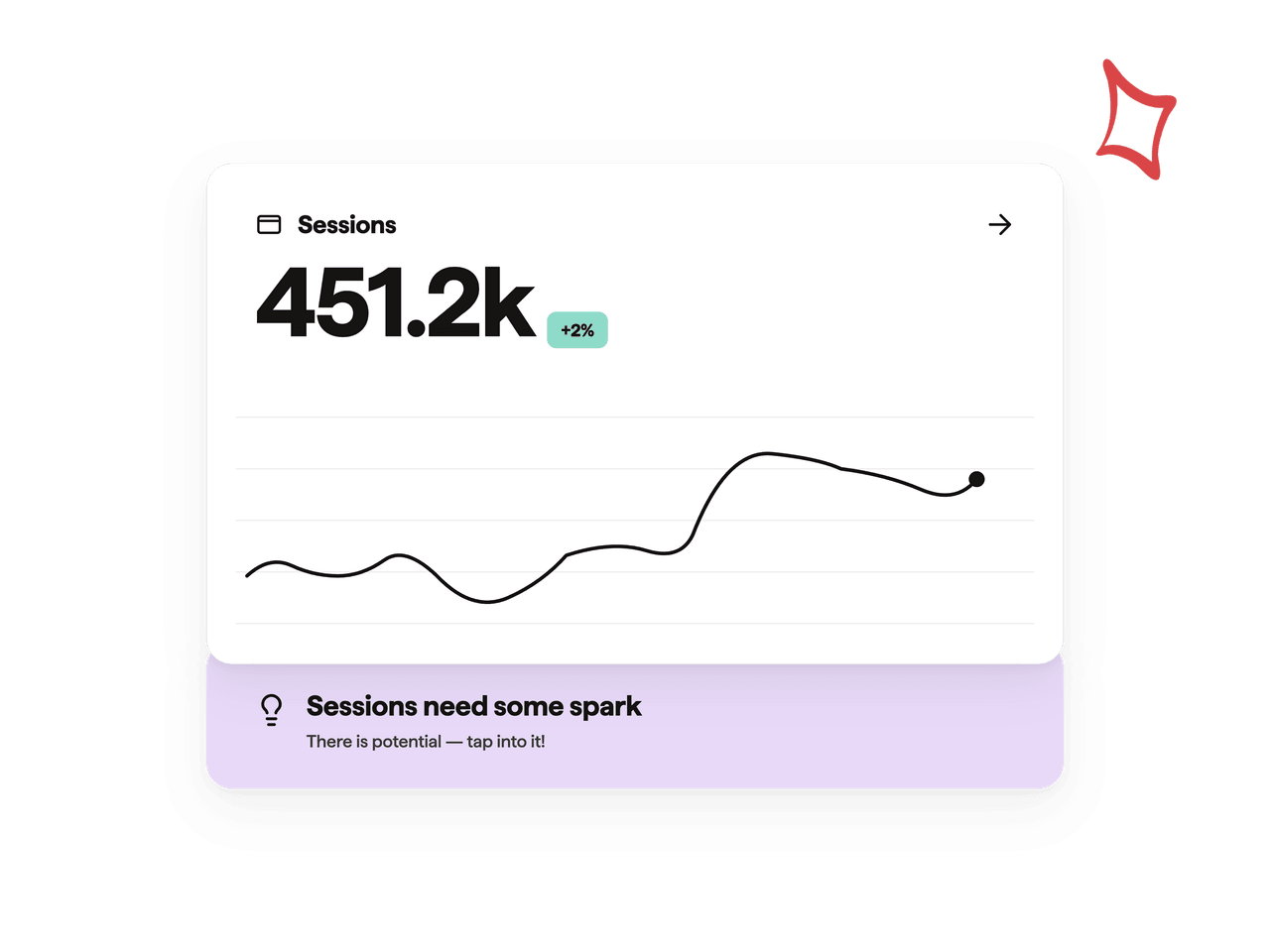
The platform watches how the website performs: traffic, rankings, visibility in AI answers, and what visitors do on every page.
Decide
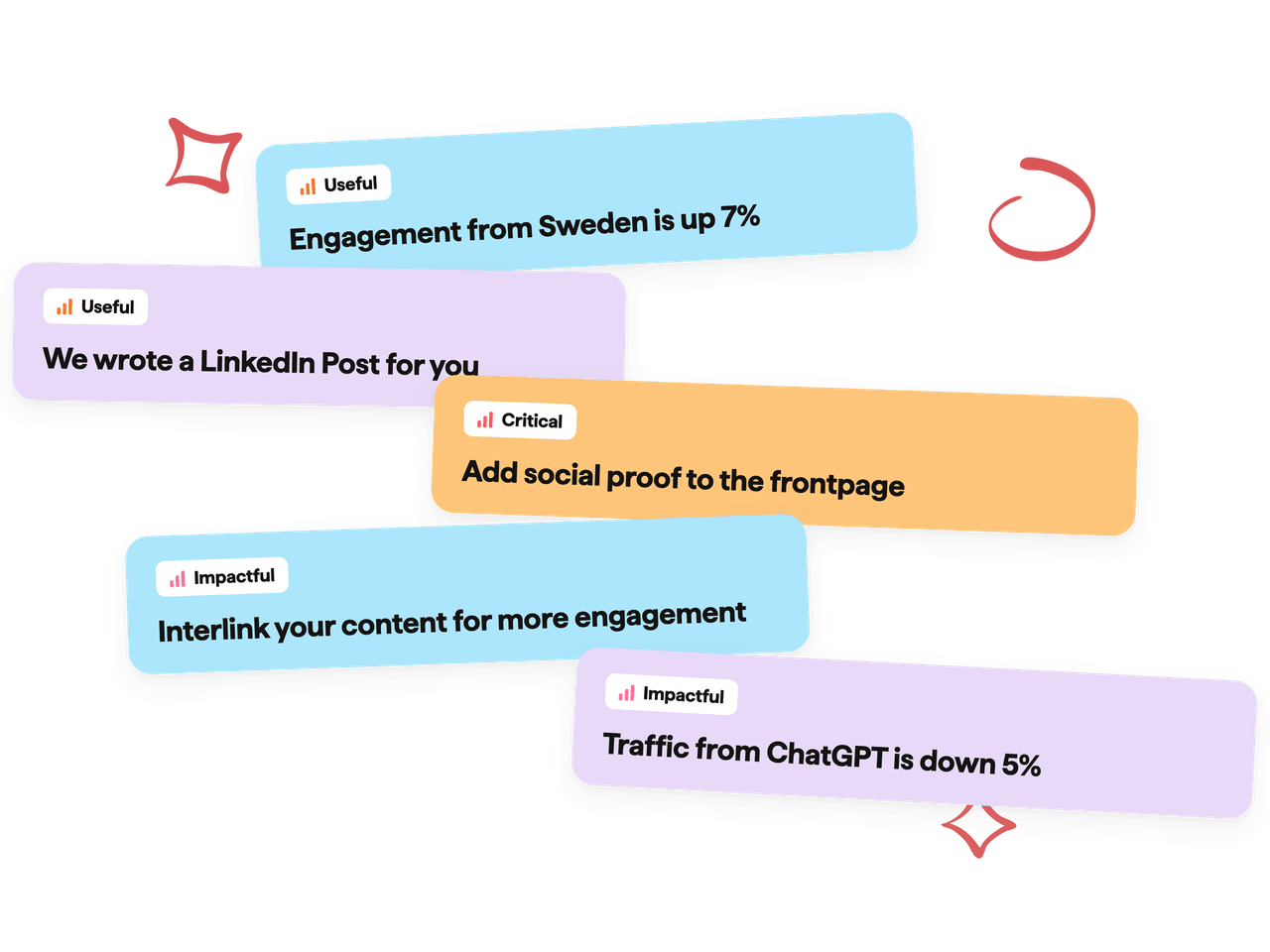
An intelligence engine turns that data into decisions. It learns the business, listens to the market, and applies patterns from thousands of other B2B websites: which page structures rank, which layouts convert, which messaging works. It ranks what's worth doing next and explains why. (How that differs from ordinary AI tools: AI website optimisation, explained.)
Ship
The platform makes the improvements itself: sharper copy, new pages, technical fixes, stronger visibility for search and AI engines. No briefs, no tickets, no waiting on anyone.
Learn
Every result feeds back in. The system gets smarter about this specific business every month. Month six beats month one. Month twelve beats month six.
The human's role changes from doing the work to directing it. Every improvement is visible before it goes live: approve it, adjust it, or let it run.
Self-improving is not the same as...
An AI website builder. Tools like Lovable or Wix's AI generate a website fast, then stop. Everything after launch is yours: the watching, the deciding, the doing. A self-improving website starts working at launch. The build was never the hard part.
An autonomous website. Some platforms promise websites that change themselves with no human involved. A self-improving website keeps a human in charge on purpose: your website is your brand's front door, and every change is approved before it ships. The system does the work. You hold the keys.
A CMS with AI features. AI assistants inside a CMS help your team do the work faster. The work is still your team's. A self-improving website removes the work itself.
For the full side-by-side pages, from Webflow and WordPress to agencies, see all comparisons.
The standard
What to look for in a self-improving website platform
Five things separate the real thing from an AI feature with a good name:
It decides, it doesn't suggest
Dashboards and recommendations still leave the work with you. The platform should know what to improve, explain why, and ship it.
It learns from more than your website
One website's data isn't enough to know what works. Look for a system that learns from patterns across thousands of comparable websites.
You approve everything
Full visibility before anything goes live, and a visual editor so you can change anything yourself. Autopilot should be a choice, not a condition.
Getting found is built in
Visibility on Google and in AI answers should be continuous and included, not an add-on, a tier, or a credit meter. (Why this matters more every month: how to get found in AI answers.)
One price, work included
If improvements cost extra, you're back to briefs and invoices. The improving is the product, so it should be in the price.
Why it matters for B2B companies
Your website is your most powerful distribution channel. It's where your product meets your market, where buyers decide in seconds whether to trust you, where AI engines decide whether to mention you, and increasingly where AI agents evaluate and buy on buyers' behalf. One website, two audiences: humans and machines.
Most B2B companies don't have anyone who owns that. The founder does the website when there's time. A marketer inherits it alongside twelve other jobs. The company keeps evolving and the website doesn't, and the gap costs leads that never show up in any report. (If that sounds familiar: why your B2B website isn't generating leads.)
A self-improving website closes that gap permanently. Not with another redesign, but by making improvement the default state of the website instead of a project someone has to start.
Where the term comes from
Optise introduced the self-improving website and built the first platform around it: it builds your B2B website, then its intelligence engine improves it every week, with your approval on every change. The idea is bigger than one company, and the standard above is what any platform claiming the category should meet.
Read the story: The Self-Improving Website: A New Way to Run Your B2B Website
Free to start. No credit card. Try in minutes.
Go deeper
What B2B marketers say about Optise

“Optise is a game changer for me as a marketer when optimizing our website.”

Frequently asked questions
A self-improving website is a business website that an AI platform measures, improves, and ships changes to every week, with a human approving every move.
Yes. That's what a self-improving website is: the platform measures performance, decides what to improve, and ships the changes automatically, while you approve every move. Optise built the first one for B2B companies, and improvements go out every week without anyone on your team doing the work.
An AI builder generates a website once, then stops; every improvement after launch is your job. A self-improving website treats launch as the starting point: the platform keeps measuring, deciding, and shipping improvements continuously. Building fast and improving forever are different products.
No. Autonomous means no human in the loop. Self-improving means the system does the work and a human stays in charge: every change is visible before it goes live, and you approve it before it ships. Autopilot is a choice you can turn on, not a condition of the platform. The system does the work. You hold the keys.